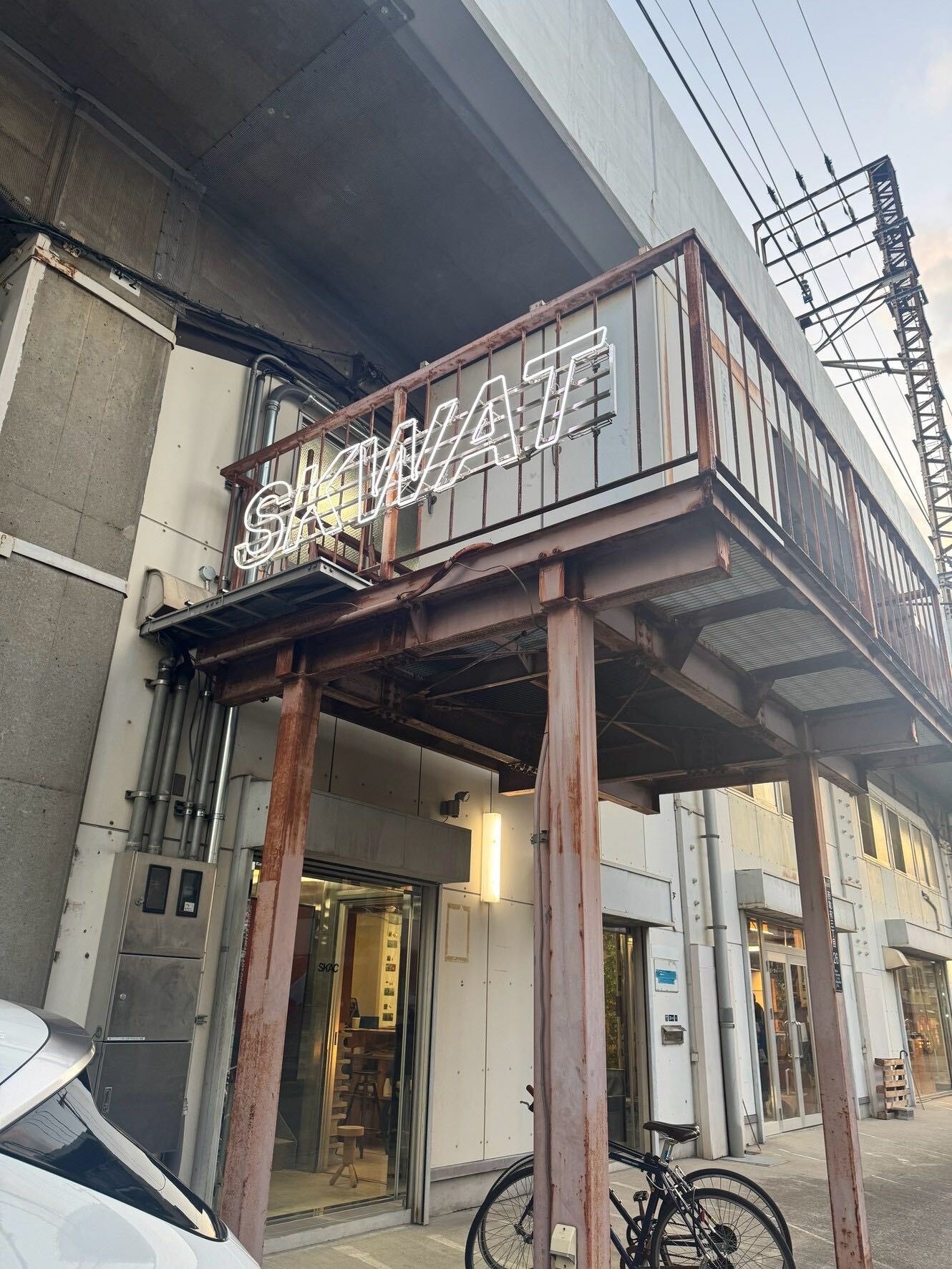
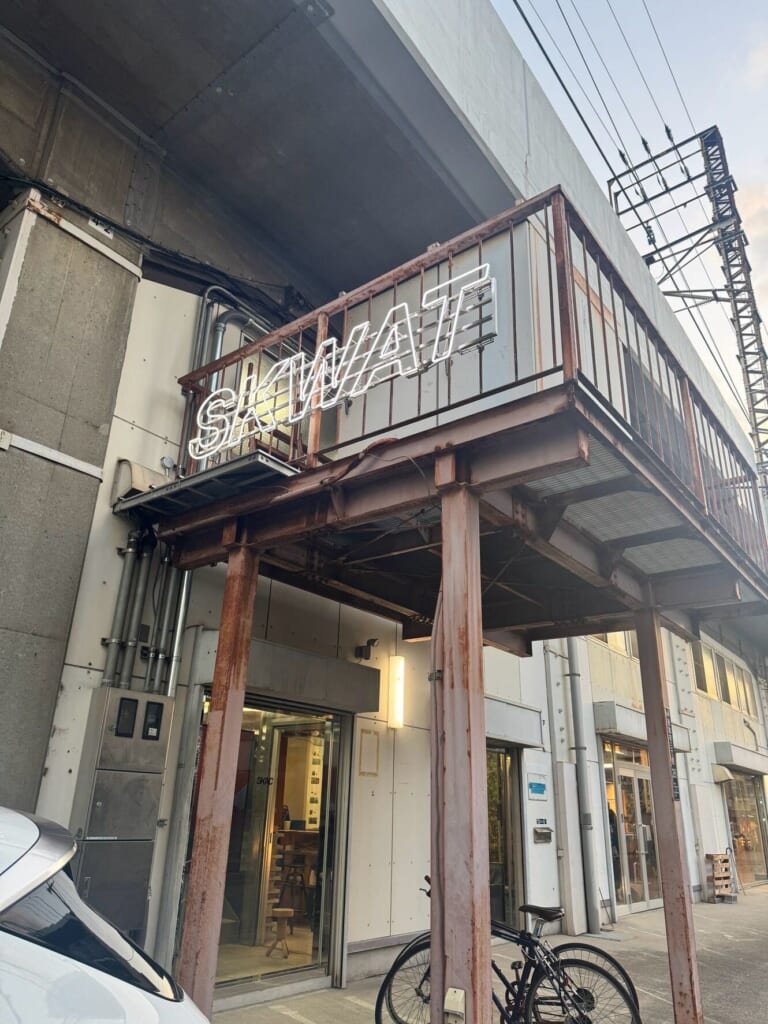
Overhead, the trains of the Joban Line rumble past. Below, on shelves built from the galvanised tubes of construction scaffolding, sit tens of thousands of art and photography books. This is Kameari, a residential neighbourhood on Tokyo’s far north-east edge, the last place you would go looking for an art bookshop. Which is exactly the point.
This is SKAC — SKWAT Kameari Art Centre — the current home of SKWAT, a project that since 2019 has gone looking for the city’s “voids”: closed shops, empty offices, forgotten spaces. It occupies them for a while, opens them to everyone, then lets them go.
About this article (who is writing, and how)
Published by Giropponando — an Italian-Japanese couple living in Tokyo, writing only about places we have actually walked into, for people arriving from Europe.
The photographs and the experience below are first-hand. The address, opening hours and opening date have been checked against Pochikame (JR East Urban Development, which manages the spaces under the tracks); the history of the project and the details of the shops against interviews and articles in Time Out Tokyo, AXIS, Pen, Monocle and WWD Japan, listed at the end.
Visited: 12 October 2026 / Information last checked: October 2026 (hours and exhibitions change — check the official Instagram before you go).
01 — The origins
Squatting, with a lease
The name comes from squatting: in 1970s London, artists moved into empty buildings away from the centre and turned them into studios and shared spaces. SKWAT keeps the spirit, not the method. Behind it is Daikei Mills, the design studio Keisuke Nakamura founded in 2011: every space is negotiated with its owner, and “occupying” here means filling a void for a limited time.
The first address, in December 2019, was a former laundry in Harajuku, a small house painted blue between two buildings. Temporary projects passed through it — among them Thousandbooks, a pop-up shop with around a thousand art titles at ¥1,000 each, run with the distributor twelvebooks.
Then came Minami-Aoyama in 2020: a former clothing shop of about 800 m², meant to stay open for three months in the run-up to the Olympics. But the Games were postponed by a year because of the pandemic, and the city was left without the event that was supposed to make it buzz. The space became one way of filling that silence, and stayed open for about three years, until 30 July 2023.
The move to Kameari was announced for August 2023; SKAC opened to the public on 2 November 2024, in a former warehouse under the JR Joban Line between Kameari and Ayase stations. It is part of Pochikame, the row of spaces carved out of the 800 metres of viaduct between the two stations.
02 — Inside
Four things in one
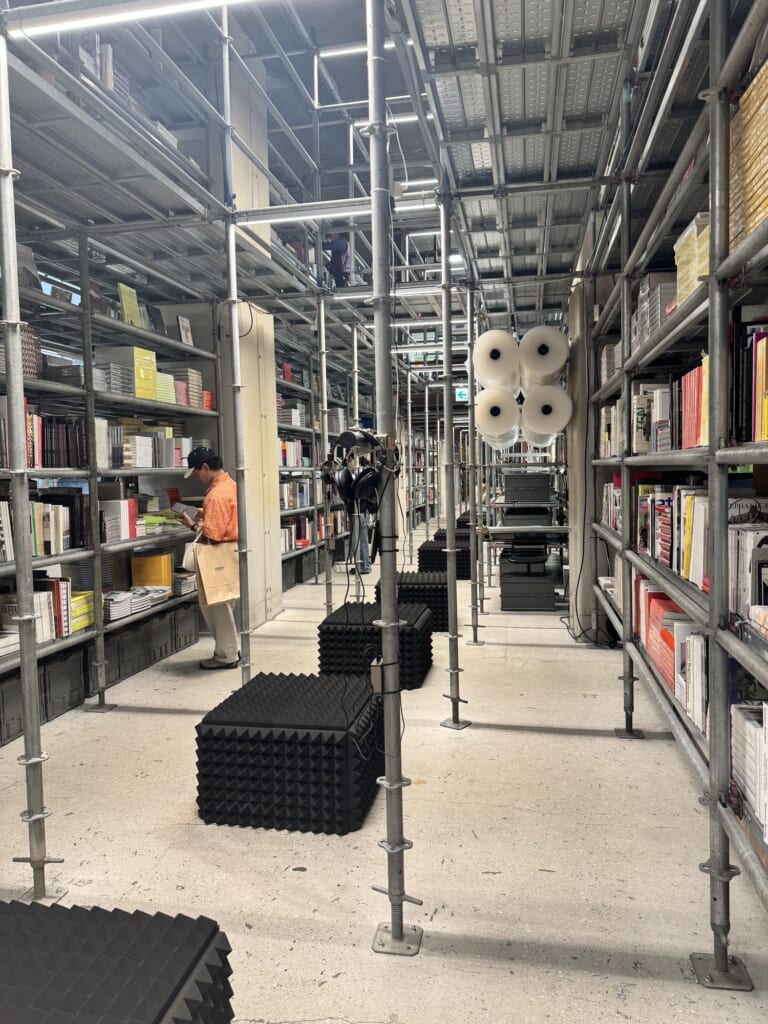
Today SKAC is a bookshop, a record shop, a café and an exhibition space. Its heart is the warehouse of twelvebooks, the distributor that since 2010 has been bringing art, photography and design books from small publishers around the world into Japan. The warehouse is open to the public and everything is for sale: around 60,000 volumes according to Time Out Tokyo, around 80,000 according to Monocle a few months later. Either way, too many to see in an afternoon.
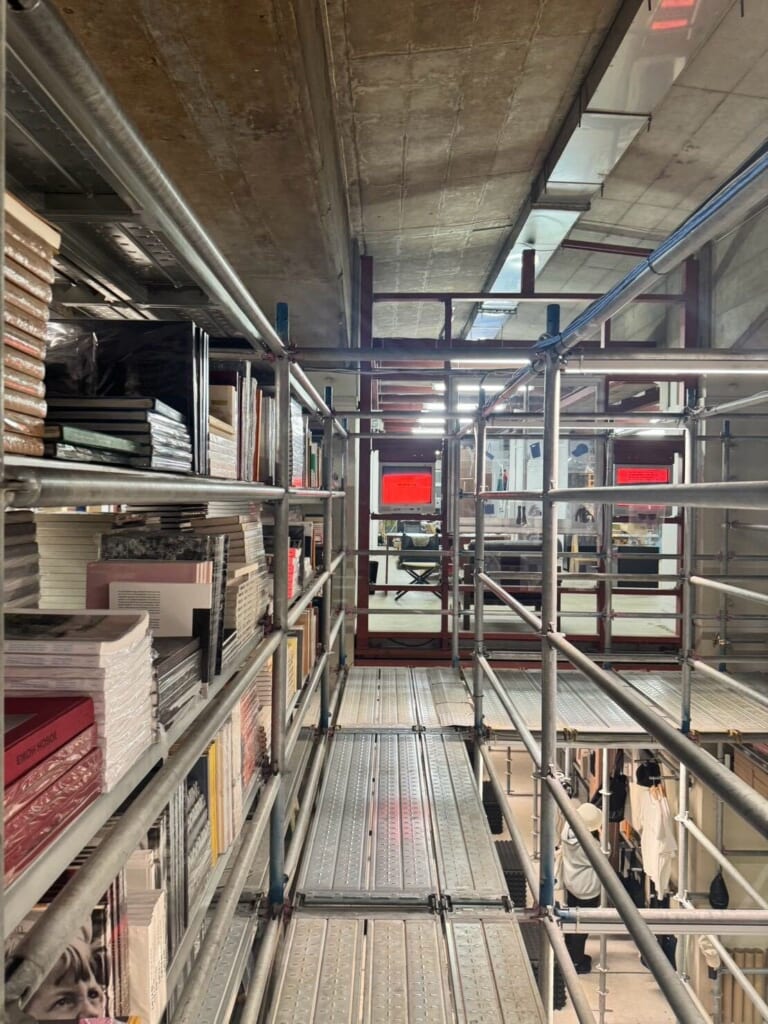
The shelves are made from construction scaffolding, assembled like a rig: they rise to a mezzanine, where you walk on perforated steel boards between more books. Between the rows, black cubes of acoustic foam serve as seats, and headphones hang from a pole. It looks like a building site someone decided never to finish.
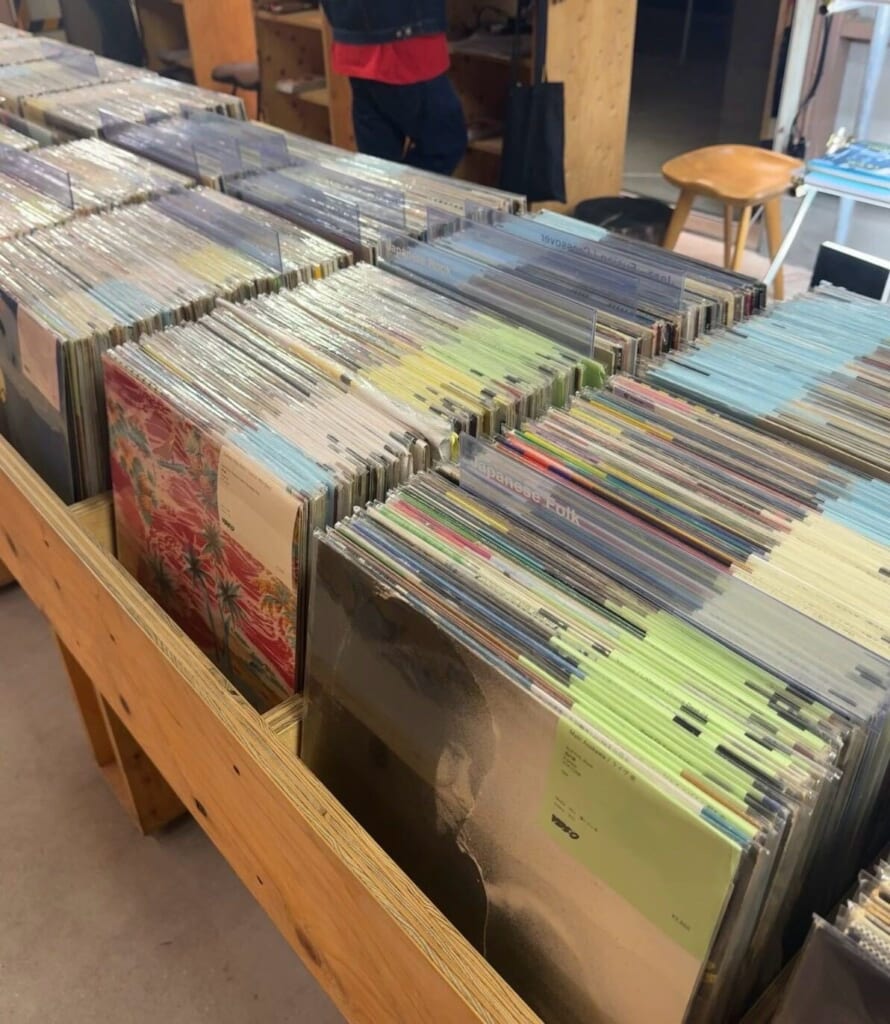
Then there are the records. VDS (Vinyl Delivery Service) started online, opened in London, and this is its first shop in Japan: mostly second-hand vinyl, sorted by genre in plywood crates — Japanese Folk, Japanese Rock — each record with its coloured label. Next door is tawks, the café, which keeps its own hours.
What makes it truly unique, though, is the archive of ephemera — posters, postcards, invitations, all the printed paper made to last a day — which comes from the Kiyosato Museum of Contemporary Art in Yamanashi Prefecture, closed in 2014. Pieces of paper that would have disappeared, and that still have a story to tell.
03 — The exhibition
Archigram, some assembly required
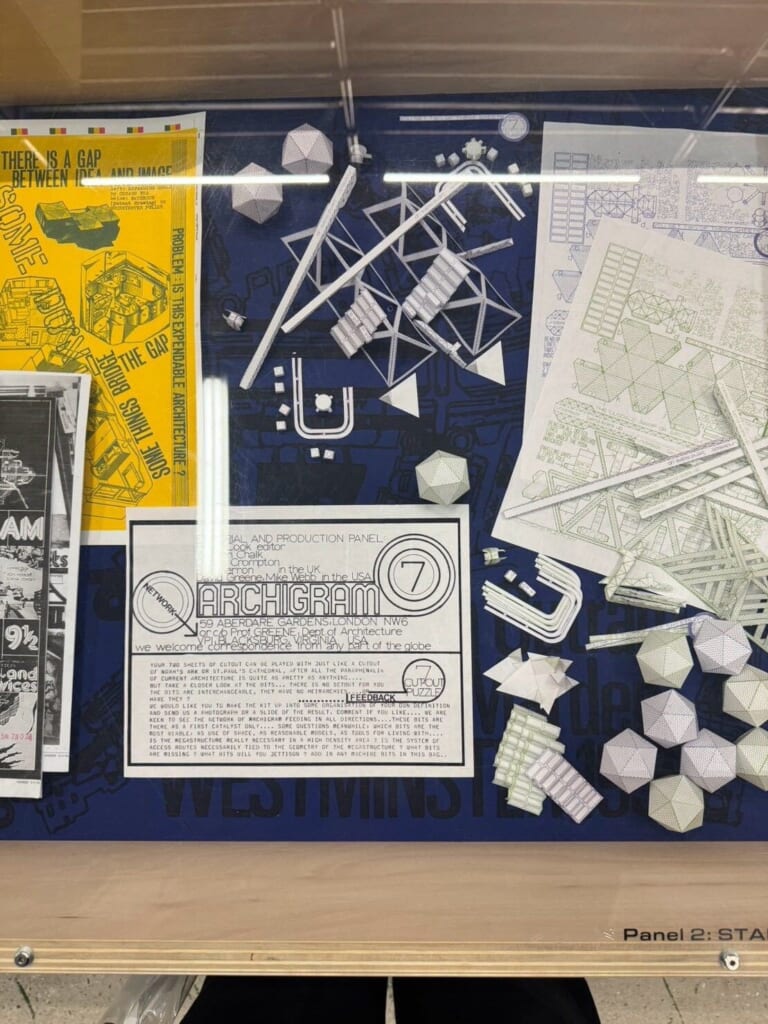
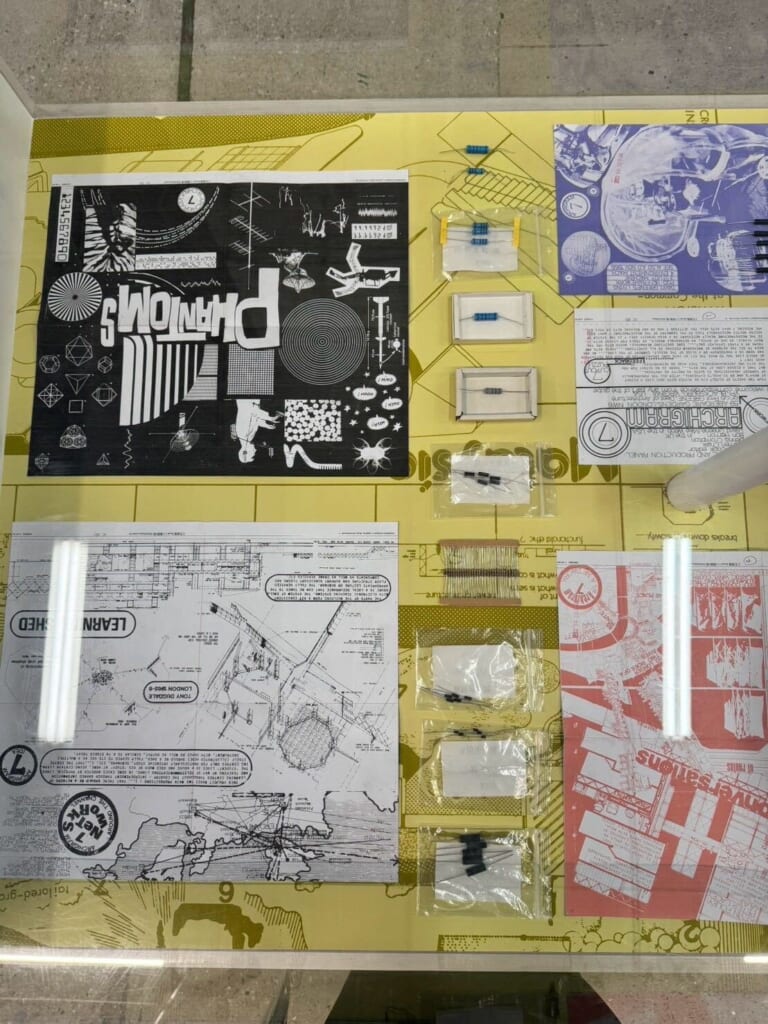
SKAC is also an exhibition space, with free-entry shows. When we visited it was hosting Archigram: Making a Facsimile (20 August – 12 October 2026): the story of how all ten issues of the London group Archigram’s magazine were reprinted in facsimile, with mock-ups and print proofs by Dennis Crompton and material lent by the architect Itsuko Hasegawa.
In the cases was issue 7, the one you play with: two sheets of card to cut out and combine into a megastructure of your own, plus a bag of real electronic components. “Add in any machine bits in this bag”, say the instructions. The show has closed, but the programme changes all the time: check what is on before you go.
04 — The idea
The most from the least
The principle is to get the most out of the least intervention: no waste, use what is already there. The warehouse under the tracks was not rebuilt. The concrete of the viaduct is left exposed, the furniture is reused construction material, and the neon sign changes the character of the place between day and evening without touching the building.
SKWAT is not a property development, nor a brand in the usual sense. It is an idea that brings Tokyo’s urban voids back to life, even if only for a while, and turns them into meeting points for art, publishing and the people who live around them.
Our tip: arrive in the afternoon and stay until the neon comes on. And while you are here, take a walk around Kameari: it is the neighbourhood where the manga Kochikame is set, far from any art-tourism circuit — a Tokyo you do not usually get to see.
Practical information
| Name | SKAC — SKWAT Kameari Art Centre (スカック) |
|---|---|
| Project | SKWAT / Daikei Mills (Keisuke Nakamura) |
| Opened | 2 November 2024 |
| Inside | twelvebooks (art and photography books), VDS (records), tawks (café), exhibition space |
| Address | 3-26-4 Nishikameari, Katsushika-ku, Tokyo 125-0002 |
| Hours | 11:00–19:00 (individual shops keep partly different hours) |
| Closed | Mondays and Tuesdays |
| Admission | Free |
| Getting there | About 10–12 minutes on foot from Kameari Station (JR Joban Line), along the viaduct towards Ayase |
| instagram.com/skwat.site | |
| Website (twelvebooks) | twelve-books.com |
Sources
- Pochikame (JR East Urban Development) — address, hours, closing days and opening date: jrtk.jp/pochikame
- AXIS (28 November 2024) — the opening and the location between Kameari and Ayase: axismag.jp
- Time Out Tokyo (12 February 2025) — around 60,000 books, the scaffold shelving, VDS and the ephemera archive from the Kiyosato Museum of Contemporary Art: timeout.jp
- Pen (January 2025) — the shelves built from scaffolding tubes: pen-online.jp
- Monocle (November 2025) — around 80,000 volumes, twelvebooks since 2010, Daikei Mills since 2011: monocle.com
- WWD Japan (February 2020) — the former laundry in Harajuku and Thousandbooks: wwdjapan.com
- Design no Temae (May 2025), interview with Keisuke Nakamura — Aoyama and the postponed Olympics: designnotemae.substack.com
- FASHIONSNAP (31 July 2023) — the closure in Minami-Aoyama and the move to Kameari: fashionsnap.com
- GO TOKYO — Pochikame and the 800 metres of viaduct: gotokyo.org
- The exhibition Archigram: Making a Facsimile (dates, contents, free entry): abc0120.net
A note on numbers: sources disagree on the number of books (around 60,000 for Time Out, around 80,000 for Monocle), and the warehouse stock changes constantly. Hours and exhibitions change too: always check the official Instagram before you go. We update this page whenever we notice a change.
Tokyo, slowly — one room at a time.
Want places like this in your itinerary? Tell us what you love — food, architecture, activities — and we will email you a tailor-made plan, with the spots only insiders know (¥20,000 per itinerary).